How to Find a Dead Rat in the Ceiling: A Brisbane Homeowner’s Guide
A sudden smell from the ceiling after nights of scratching or scurrying can make a Brisbane household suspect a dead rat in the roof void. The difficulty is that a ceiling cavity is not a simple open room: insulation, rafters, ductwork and restricted access can hide the source. Trying to locate a carcass by cutting into the plasterboard or moving across roof framing is not a safe starting point.
If you want to know how to find a dead rat in the ceiling, begin by recording the clues that can help a professional narrow down the location. Odour, activity history, flies and building access all matter, but none gives a perfect answer alone. For suspected rat carcasses, our dead rat removal in Brisbane page explains the matching service.
What Are the Signs of a Dead Rat in the Ceiling?
A strong unexplained odour is often what first draws attention to a ceiling void. It might be stronger in a particular bedroom, hallway or near a downlight, although airflow may carry the smell away from the source. Other signs can include flies appearing near windows or ceiling gaps, an area of discolouration, and the sudden absence of earlier scratching noises.
The pattern is helpful rather than conclusive. A roof leak, blocked drain or unrelated contamination can also cause a smell. Similarly, noises may stop because an animal has moved elsewhere. A careful assessment avoids treating every roof-space smell as a confirmed dead rat.
Does a stronger smell show the exact location?
Not reliably. Air can move through ceiling penetrations, vents and gaps. The location where you notice the odour may be a path for the air rather than the location of the carcass. A technician will typically combine several clues instead of cutting into the strongest-smelling point.
How Can You Check Without Entering the Roof?
Start in the living area. Note the rooms affected and whether the smell is strongest near an accessible ceiling hatch, light fitting, built-in cupboard or air-conditioning return. Record when you first noticed the odour and whether the household recently used rodent bait or heard activity above the ceiling.
Look only from safe, accessible positions for stains, flies or gaps around the roofline. Keep hands away from openings and do not remove insulation or disturb electrical fittings. If you cannot safely access the roof void, leave the inspection to a trained technician. Even apparently sturdy roof spaces can contain unsupported ceiling lining, exposed wiring and other hazards.
How Do Professionals Locate a Dead Rat Above a Ceiling?
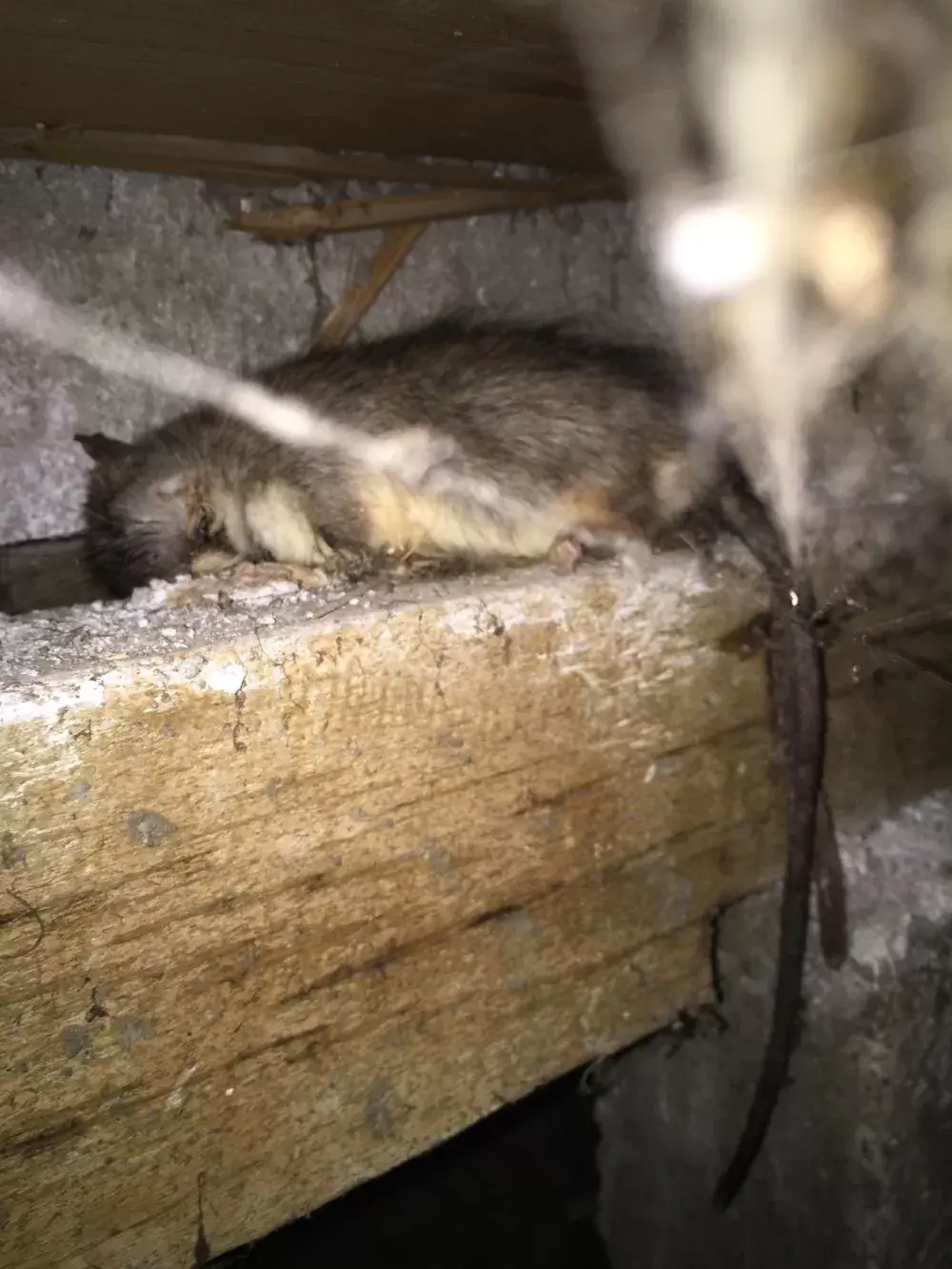
A professional search generally starts with questions and a site assessment. The technician may examine safely accessible roof areas, consider likely rodent movement routes and look for relevant evidence. A carcass can be behind insulation, close to an edge, beside ducting or in an adjacent cavity rather than directly over the room where the smell is strongest.
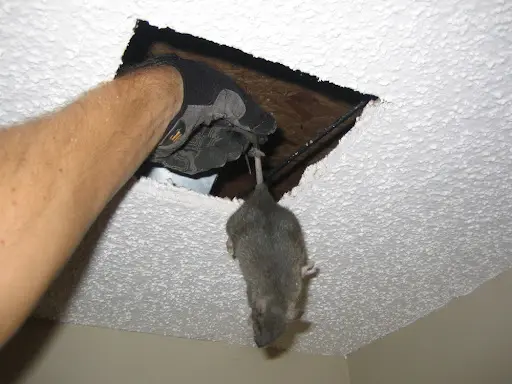
The right approach should minimise disturbance. Where an existing roof access point provides safe reach, retrieval may be possible without making a new opening. Where access is restricted, the technician should explain the available options and limitations before any intrusive work.
Our dead rodent removal service also covers situations where it is unclear whether a rat or mouse is involved. Accurate identification helps determine what prevention work may be needed afterward.
Could the Animal Be a Possum Instead?
Yes, which is why a noise history is useful. Queensland Government guidance distinguishes the lighter scurrying and gnawing of rats from the heavier footfall often associated with possums, but these are general clues, not a diagnosis. Possums are protected native wildlife and living animals must not be trapped or relocated unlawfully.
If the evidence suggests a possum in the roof, discuss the situation with an appropriately qualified provider. If the animal is confirmed deceased, the relevant internal service is dead possum removal in Brisbane.
What Happens After a Dead Rat Is Found?
The main priorities are safe retrieval, contained handling and a practical assessment of the affected area. A technician may recommend appropriate sanitation, treatment of contaminated accessible surfaces, and checking any insulation or other material immediately around the carcass. Ask what is included in the service and what may require a separate contractor.
Next, consider how rats entered. Roof edges, vents, pipe penetrations and adjoining structures may provide pathways. Rodent activity elsewhere in the home can continue even after one carcass is removed. Entry-point repairs and pest-control advice should be considered as a separate prevention step.
Why Should You Avoid DIY Roof-Space Removal?
Roof cavities may contain electrical wiring, sharp materials, dust, contaminated droppings and areas that cannot support a person's weight. A fall through the ceiling is a serious risk. Direct contact with a carcass or contaminated insulation is another concern. Do not climb into an unfamiliar roof void or touch potentially contaminated material without proper assessment and protective procedures.
Spraying fragrance into ceiling openings may temporarily mask the smell, but it does not identify or remove the source. Likewise, setting further bait without understanding the existing infestation may create additional inaccessible carcasses.
What Should Be Included in Your Booking Enquiry?
Give the technician the suburb, property type, location of the smell, when it started and when the last rodent noise was heard. Tell them whether roof access exists and whether any bait, traps or pest treatments have been used recently. Mention solar wiring, air-conditioning equipment or a difficult roof pitch if relevant.
Ask whether the service covers source investigation, removal if accessible, sanitation, odour treatment and an explanation of any access limitations. A responsible provider should discuss uncertainty rather than guarantee that every carcass can be found in advance.
Frequently Asked Questions
How do I know whether a dead rat is in the ceiling?
Odour, earlier scurrying noises, insects or staining can suggest a hidden carcass, but they do not confirm the species or location. Inspection is needed.
Can a dead rat be found without cutting the ceiling?
Sometimes, especially when an existing roof hatch allows safe access. Other situations may have inaccessible spaces; the provider should explain the options before altering the building.
Can I use an air freshener until the problem goes away?
Air fresheners may disguise odour temporarily but do not remove contamination. Prioritise assessment of the underlying source.
What if I recently had rodent treatment?
Tell the removal provider what products or traps were used and when. That history may help with the search and planning further prevention.
What if the carcass cannot be reached?
Ask the technician to explain the evidence, the access limitations, any safe alternative approach and what follow-up or monitoring is appropriate.
Sources and further reading
This article provides general information rather than a guarantee that a particular ceiling odour is caused by a rat. Useful references include:
- Queensland Government: About possums — distinctions between rat and possum signs in roof spaces.
- Queensland Government: Removal of snakes, possums and pests — pest and wildlife handling information.
- Near Me Dead Animal Removal Brisbane: Dead rat removal — service information relevant to a suspected rat carcass.
Need dead rat removal from a Brisbane ceiling?
Tell Near Me Dead Animal Removal Brisbane which rooms smell, whether you heard scratching earlier, and whether there is a roof access hatch. You can request a dead rat removal assessment or contact the team to discuss safe access, removal, cleaning and entry-point checks before booking.